
Quantum-Safe Encryption: Safeguarding Data for the Quantum Era
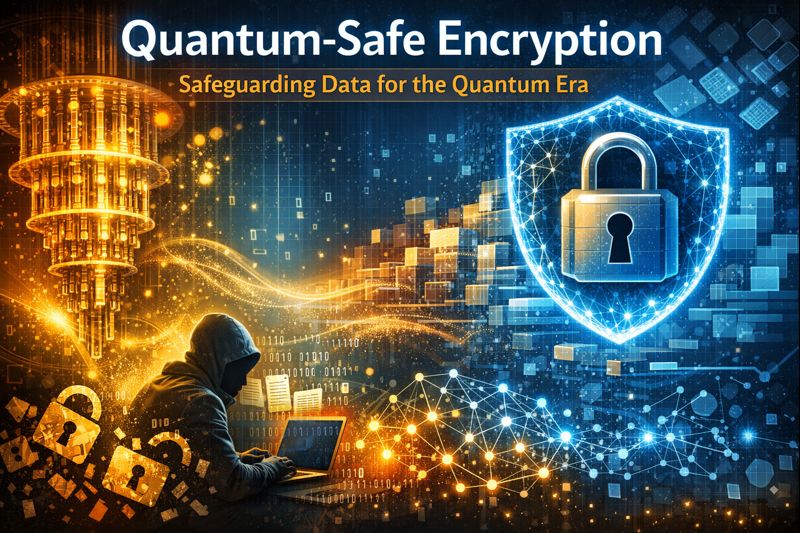
Imagine if someone invented a master key that could unlock every safe in the world. That's essentially what quantum computers threaten to do to our current encryption systems. But don't panic—scientists are already building better locks. Welcome to the world of quantum-safe encryption.
What's the Problem?
Right now, your online banking, private messages, and sensitive data are protected by encryption methods that would take today's computers millions of years to crack. These systems rely on complex math problems that are incredibly difficult to solve—like trying to find two specific numbers that, when multiplied together, give you a 300-digit number.
However, quantum computers work fundamentally differently from regular computers. While your laptop processes information as bits (ones and zeros), quantum computers use "qubits" that can be both one and zero simultaneously. This gives them extraordinary processing power for certain types of problems, including the exact math problems our current encryption relies on.
The "Harvest Now, Decrypt Later" Threat
Here's something unsettling: cybercriminals and hostile nations are already collecting encrypted data today, even though they can't read it yet. They're betting that when powerful quantum computers arrive—possibly within the next decade—they'll be able to decrypt everything they've stored. Your sensitive information from today could be exposed years from now.
Enter Quantum-Safe Encryption
Post-quantum cryptography (PQC), also called quantum-safe encryption, is a new generation of encryption methods specifically designed to resist attacks from both quantum and classical computers. Think of it as replacing your old lock with one that even a master key can't open.
These new methods use different types of mathematical problems that even quantum computers find extremely difficult to solve, such as:
Lattice-based cryptography: Imagine trying to find a specific needle in a multi-dimensional haystack where the dimensions keep shifting
Hash-based signatures: Creating a unique fingerprint for your data that's virtually impossible to forge
Code-based cryptography: Using error-correcting codes that create puzzles too complex even for quantum computers
What's Being Done?
The U.S. National Institute of Standards and Technology (NIST) has been leading a global effort to standardize quantum-safe encryption. In 2024, they released the first set of approved post-quantum cryptographic algorithms that organizations can start implementing today.
Major tech companies like Google, Apple, and Microsoft are already testing and integrating these new encryption methods into their systems. Some messaging apps have begun rolling out quantum-resistant encryption to protect your conversations.
Why Should You Care?
You might think, "I'm not a government agency or a bank—why does this matter to me?" Here's why:
Your data has a long shelf life: Medical records, financial information, and personal communications could remain sensitive for decades
Everything is connected: From your smart home devices to your car, encryption protects the Internet of Things
Future-proofing: The organizations you trust with your data need to prepare now to protect it later
What Happens Next?
The transition to quantum-safe encryption won't happen overnight. It's more like gradually upgrading an entire city's infrastructure while people are still living in it. Organizations worldwide are developing migration plans, testing new systems, and updating software.
As an individual, you don't need to do much right now, but it's worth staying informed. Look for companies that take security seriously and are transparent about their quantum-readiness plans.
The Bottom Line
Quantum computers represent both an incredible opportunity for scientific advancement and a significant challenge to our digital security. The good news is that the cryptographic community saw this coming and has been working on solutions for years.
Quantum-safe encryption isn't just about protecting data—it's about preserving trust in our digital world. As we stand on the brink of the quantum era, these new encryption methods will be the invisible guardians keeping our information safe, ensuring that the quantum revolution enhances our lives without compromising our security.
The race is on, but we're not starting from behind. By preparing today, we're building a safer tomorrow—one where quantum computers can change the world without breaking it.