
Phishing for Passwords! – A Simple Walkthrough of Day 2 (Advent of Cyber)
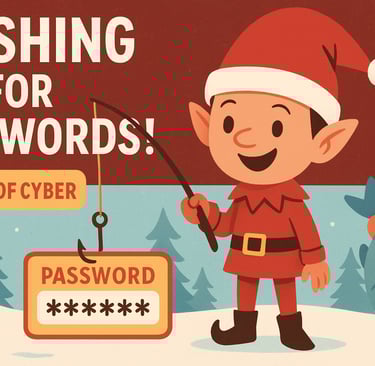
Today’s challenge focused on one of the most common cyber-attacks out there: phishing. The Best Festival Company (TBFC) recently faced several security threats, so their internal red team stepped in to test whether employees could recognize a suspicious email — before a real attacker tries the same.

What We Did
In this exercise, we stepped into the shoes of a red teamer and carried out a safe, authorized phishing test against TBFC staff. The goal was simple:
✔️ Build a convincing fake login page
✔️ Send it to a target employee
✔️ See whether anyone would enter their credentials
This helps the company understand whether more training is needed — and reminds staff how easy it is to be fooled by a realistic message.
How the Trap Was Set
First, we hosted a fake TBFC login page using a pre-built script. The page looked real, but instead of logging people in, it quietly collected whatever username and password they typed.
After starting the server, the page became accessible on a simple web address that we could share in an email.
Sending the Phishing Email
To deliver the trap, we used a popular social-engineering tool called the Social-Engineer Toolkit (SET). SET allows attackers (and ethical testers!) to craft realistic emails that appear to come from trusted senders.
We:
Pretended to be a familiar shipping company
Wrote a believable message about “Shipping Schedule Changes”
Included the link to our fake login page
Sent it directly to the target’s inbox
Then we waited.
What Happened
Before long, the server showed a set of login credentials — meaning someone fell for the message and entered their password. This is exactly why phishing tests are important: even trained staff can still make mistakes under pressure.
From there, we also checked whether the same password had been reused in the employee’s email account, revealing just how damaging real-world phishing can be.
Technical Tools Used (Explained Simply)
Social Engineering Toolkit (SET) – used to build and send a realistic phishing email
Fake login page & capture script – a simple web server that collects typed credentials
Email spoofing techniques – making the email look like it came from a trusted sender
Basic hosting – running a local webpage reachable from the target’s machine
Bonus: Fixing Tool Installation Issues
If SET or other Python tools complained about missing packages (like the old pycrypto), the fix was to install modern replacements (pycryptodome) or run everything inside a safe virtual environment, avoiding system-level errors and preventing operating-system conflicts.
https://tryhackme.com/room/phishing-aoc2025-h2tkye9fzU?utm_campaign=social_share&utm_medium=social&utm_content=room&utm_source=copy&sharerId=68628169cd72a065895b7f0a