
Fake Traffic Fine SMS Stealing Bank Card Details
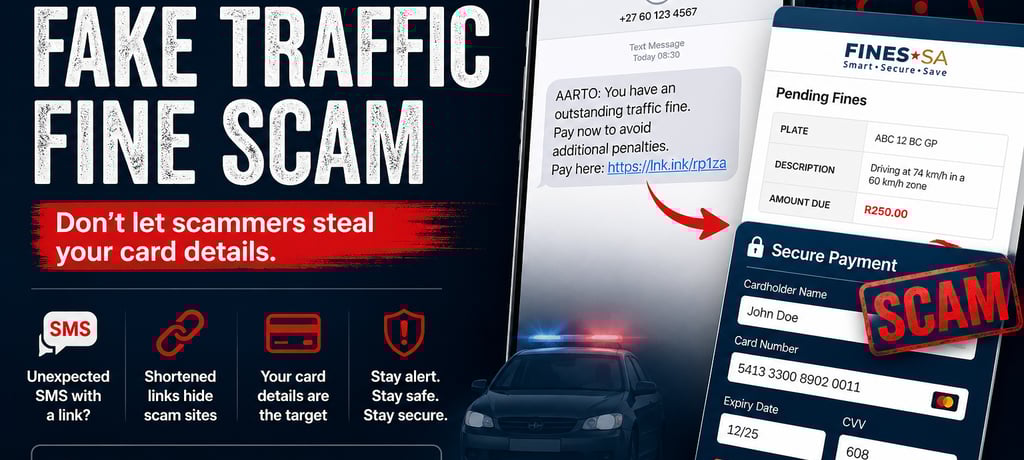
Category: Scam Alert · South Africa Published: April 2026 A new SMS phishing campaign is targeting South African motorists. The message claims you have an outstanding traffic violation that must be paid urgently, but it's a trap designed to steal your bank card information. The SMS contains a shortened link to hide the real destination and make the message appear legitimate.
How the scam works
The attacker sends an SMS containing a shortened link (through lnk.ink) to disguise the real destination. Clicking it redirects you to a fraudulent website designed to imitate a South African traffic fine payment portal.
The shortened link — for example lnk.ink/rp1za — redirects to a fake payment site at finessaa-co.shop/za/.
Here is what happens step by step:
SMS with shortened link — A message arrives urging urgent payment via a disguised link, hiding the true destination.
Redirect to fake portal — You are taken to a fraudulent site designed to look like an official payment portal.
Enter any registration — The site asks for a vehicle registration number but accepts anything you type.
Fake fine displayed — A fabricated fine amount appears regardless of what was entered.
Card details captured — The payment form requests your full bank card details. This is the only real goal.
Warning signs to watch for
1. Shortened link
Legitimate traffic authorities never use link shorteners. These are used to hide the real destination URL and make fraudulent messages appear more credible.
2. Any plate number works
The site does not validate registration numbers — it generates a fine regardless of what you enter. A real fine portal would check your plate against an official database.
3. Fake urgency
The page warns that failure to pay may result in increased penalties, licence suspension, or court action. This pressure tactic is designed to stop you from thinking critically and push you into paying quickly.
4. Card details are the only real target
The only field the site appears to validate is your payment card information. This confirms the site's sole purpose is bank card theft, not fine collection.
What they steal
Victims who complete the form unknowingly hand over everything needed for fraudulent transactions:
Cardholder name
Card number
Expiry date
CVV code
This information can be used immediately for unauthorised purchases and fraudulent transactions.
How to protect yourself
Do not click traffic fine links sent by SMS. Go directly to official government websites instead.
Verify fines through official sources only — your municipality's website or a known government portal.
Check the full website address carefully before entering any personal or payment details.
Never enter card details on a site you reached through an SMS link.
Report suspicious SMS messages to your IT or security team immediately.
Key takeaway
This campaign uses a convincing fake website and a shortened link to steal payment card details from victims. If you receive an unexpected traffic fine by SMS, treat it as suspicious until verified through an official source. When in doubt, go directly to your municipality's official website — never follow a link sent to you unsolicited.